Chadds Ford's Median Home Price Is Blending Two Different Markets Into One Number
September 17, 2026
September 17, 2026
Check three real estate sites for Chadds Ford on the same evening and you will come away with three different towns. One might show a median list price around $1.07 million this September. Another might report a median sale price near $249,000 for the month, built on a base of just eight closings, while the same source's average price for those same eight sales fell nearly 70 percent from a year earlier. A third averages the trailing twelve months of sales and lands somewhere between $795,000 and $851,000, and if you check that same page again next week, the range has already shifted.
None of those numbers is wrong. Each one is measuring a real slice of a market too small and too split to average cleanly. Chadds Ford does not have one housing market. It has two, filed under the same zip code, and whatever "median" a portal hands you is whatever you get when you blend a colonial on a third of an acre with a custom estate on five.
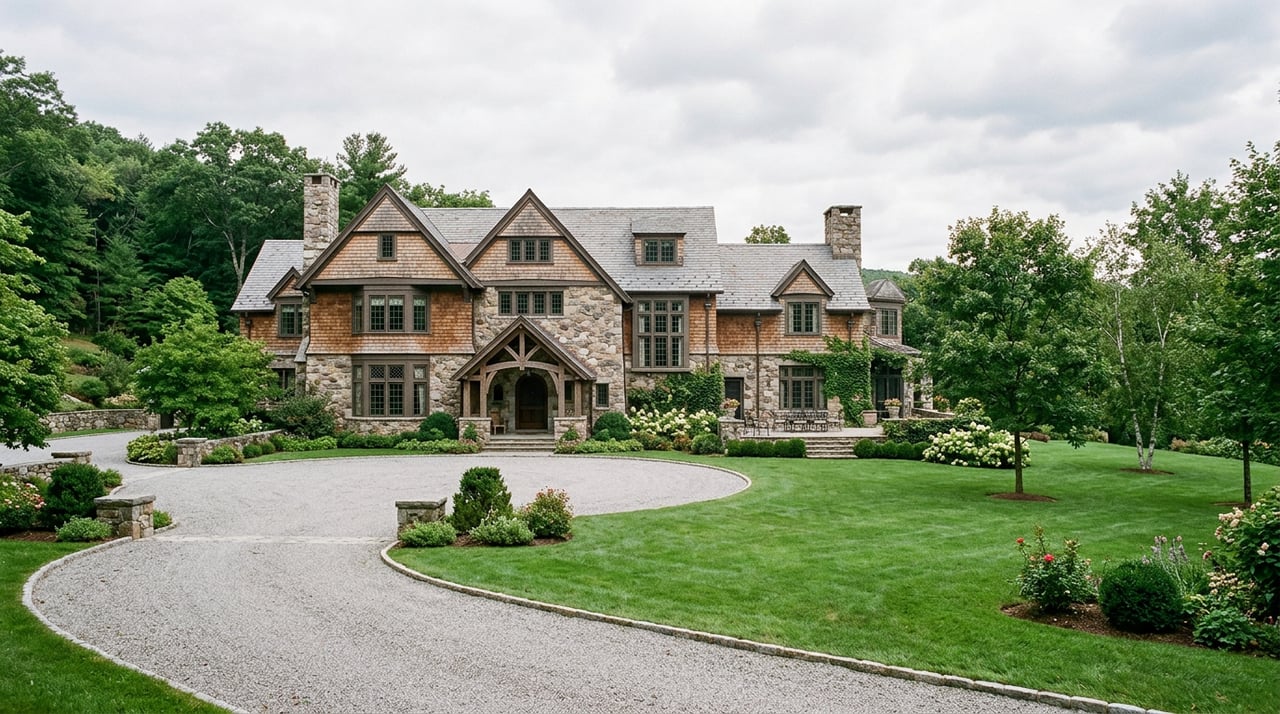
The first market is the one most buyers picture when they say "Chadds Ford": established, walkable-scale subdivisions built mostly in the 1990s and 2000s, on lots that generally run between three tenths of an acre and a bit over one. Radley Run, Reserve at Chadds Ford, Estates at Chadds Ford, Hamilton Place, Spring Meadows, and The Ridings at Chadds Ford all sit in this tier. Dozens of similar Colonial and transitional layouts have closed here over three decades, so a straightforward price-per-square-foot comparison actually holds up. This is comp-friendly inventory.
The second market runs along the Ring Road and Hillendale corridor and spills into pockets like Oakland Road. Lot sizes here regularly stretch past five acres and occasionally into the twenties. The housing stock is a mix of historic stone farmhouse conversions and new custom construction, and none of it prices the way a subdivision colonial does. A five-acre parcel with a meandering creek and a gentle slope is not competing on square footage. It is competing on land, view, and the builder's name on the plans.
Here is what separates the two layers when you line them up:
| Subdivision Layer | Estate-Acreage Layer | |
|---|---|---|
| Typical lot size | 0.3 to 1.4 acres | 2 to nearly 30 acres |
| Typical era | Built 1990s–2000s | Historic conversions plus new custom builds |
| How it prices | Dozens of comparable closings, reliable $/sqft math | Priced on land, privacy, and build quality more than square footage |
| Named examples | Radley Run, Reserve at Chadds Ford, Estates at Chadds Ford, Hamilton Place, Spring Meadows, The Ridings at Chadds Ford | Ring Road/Hillendale corridor, Enclave at Chadds Ford, Timber Ridge |
Blend those two rows into a single "median home price" and you get a number that describes neither market particularly well. That is not a data error. It is what happens when a town's inventory splits this cleanly and a portal's algorithm treats it as one pool.
The estate layer is easiest to see in the current new-construction activity. Hellings Builders' Enclave at Chadds Ford, a four-homesite community on Oakland Road with each lot at two acres or more, has active pricing running from about $1.8 million to just under $1.93 million per home, depending on the model. A short distance away, Rotelle Development Company is marketing a custom build on a 4.76-acre parcel with a gentle slope and a meandering creek. Megill Homes has a 2.1-acre project under construction for 2026 delivery with over 4,200 square feet above grade. None of these three builders is pricing off a subdivision comp sheet. They are pricing land, acreage, and craftsmanship, which is exactly why a $/sqft figure pulled from a portal will not explain what any of them cost.
Meanwhile, buyers who want acreage without a builder markup have their own path. A 2-acre homesite in the Stonebrook neighborhood, at 8 Atwater Road, offers a community setting with no HOA at all, which is its own variable the blended median never separates out. Nearby, a five-lot enclave called Timber Ridge has one lot left with no builder tie-in and a completed perc test, aimed at buyers who want to choose their own contractor rather than build inside a developer's program.
One listing platform illustrates the noise problem well on its own. Across different pulls of its Chadds Ford new-construction page this year, the same site reported a trailing twelve-month average sale price of $795,085, then $799,933, then $851,459, each time citing a different year-over-year percentage change. That is not three different markets. That is one market with so few monthly closings that each pull captures a slightly different set of sales, and the average moves accordingly.
A $900,000 subdivision colonial and a $1.9 million custom build two miles up Oakland Road are not setting the same market. They are two different products that happen to share a mailing address.
Buyers often treat "Chadds Ford" as shorthand for the Unionville-Chadds Ford School District, and for most of the township that assumption holds. But at least one active Chadds Ford-address land listing this year sits inside the Garnet Valley School District instead, five acres with site plans for additional buildable lots. If you are anchoring a school-district assumption purely to the town name, it is worth confirming the actual district before you get attached to a property. This is one more way a single Chadds Ford search can return two different products wearing the same address.
Even within a single data source, small sample sizes do strange things. One tracking service recorded just eight closed sales in Chadds Ford during March 2026, with a median sale price of $249,000, up 9.2 percent year over year, while the average sale price for the same period fell 68.6 percent. Both figures came from the same eight transactions. The only way both are true at once is if one or two outlier sales, a small parcel, a fixer, a partial-interest transfer, pulled the average down hard while the sale that set the median ticked up slightly. With eight transactions, one unusual closing can swing the town's whole month.
Days on market tells a similar story. Depending on which snapshot you check, Chadds Ford homes have recently sold in as few as 18 days or as many as 92. That is not a market cooling or heating. That is a low-volume town where a handful of quick estate-corridor sales and a handful of slower subdivision listings get averaged into one figure that describes neither pace accurately.
If you are cross-shopping Chadds Ford against West Chester or Glen Mills using a single median price, you are comparing a blended figure to a number that may not carry the same split. Before you treat any Chadds Ford comp as reliable, ask which layer the listing actually sits in. A $700,000 to $900,000 budget generally puts you in the subdivision tier, where Radley Run, Estates at Chadds Ford, and similar communities offer the closest thing to a predictable comp set the township has. A budget north of $1.5 million usually moves you into the estate-acreage tier, where the Ring Road and Hillendale corridor, along with builder-led communities like Enclave at Chadds Ford, price on land and construction quality rather than a square-foot formula.
For sellers, the stakes are just as real. Pulling comps from the wrong layer, treating a two-acre custom build like a subdivision colonial or vice versa, can misprice a listing by hundreds of thousands of dollars before it ever hits the market. Getting this right starts with knowing which of Chadds Ford's two markets your property actually belongs to, not with the number a portal happens to show you today.
Why do real estate sites disagree so much about Chadds Ford home prices? Chadds Ford closes very few homes most months, sometimes fewer than ten, and its inventory splits between compact subdivision homes and multi-acre estate properties. A site pulling this month's raw figures will look nothing like one averaging the trailing twelve months, and neither is describing the whole picture.
Is every home with a Chadds Ford address in the Unionville-Chadds Ford School District? Not always. At least one active Chadds Ford-address parcel this year falls inside the Garnet Valley School District instead. Confirm district assignment directly rather than assuming it from the town name.
What actually separates the estate-acreage corridor from the subdivisions? Mostly lot size and era. Subdivisions like Hamilton Place or Spring Meadows were built in the 1990s and 2000s on lots under a acre and a half, which makes their comps reliable. The Ring Road and Hillendale corridor holds historic farmhouse conversions and new custom construction on parcels that can stretch past 20 acres, priced on land and craftsmanship rather than square footage.
A blended median can tell you that Chadds Ford is expensive. It cannot tell you which Chadds Ford you are actually shopping in, or what a specific lot on Oakland Road versus a colonial in Estates at Chadds Ford is really worth right now. That reading comes from someone who tracks both layers of this market as they move, not from a single number on a search page.
If you are weighing a move into Chadds Ford or trying to price a home correctly within it, John Bell has spent decades sorting exactly this kind of local nuance. Request your free home valuation and get a read on your property that accounts for which market it actually belongs to.
Stay up to date on the latest real estate trends.
Get assistance in determining current property value, crafting a competitive offer, writing and negotiating a contract, and much more. Contact John today so he can guide you through the buying and selling process.