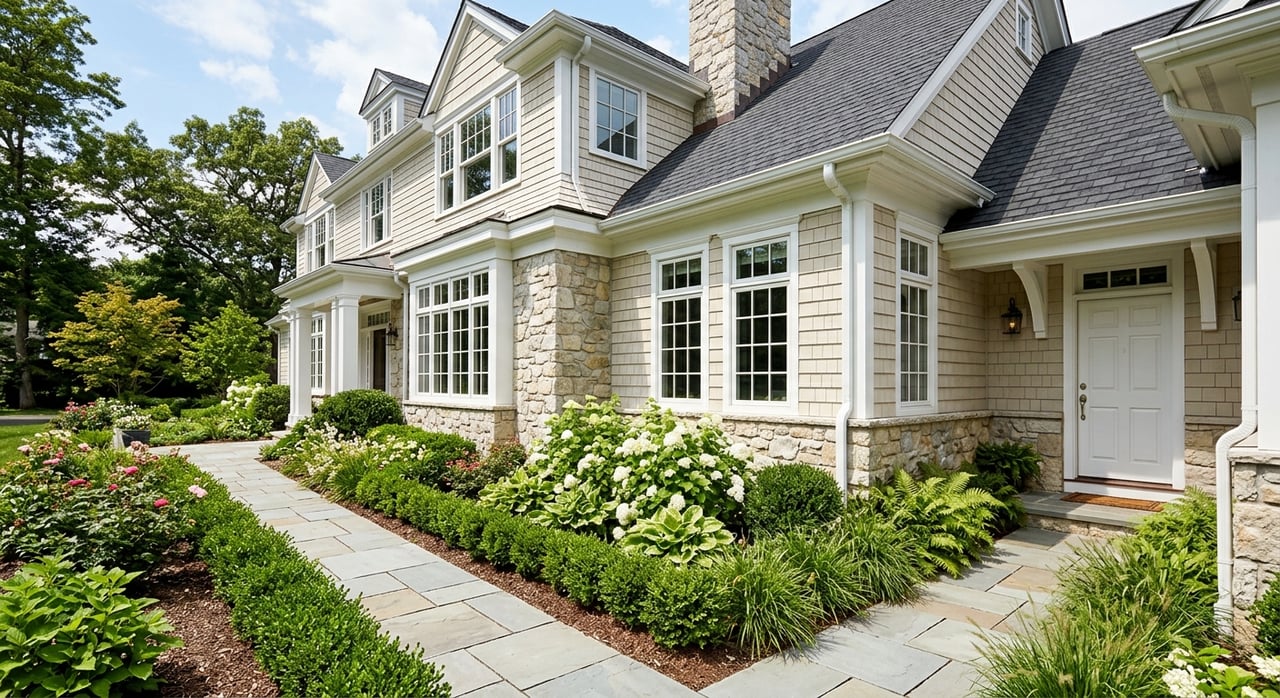
West Chester Home Pricing Strategy for Sellers
June 4, 2026
June 4, 2026
Pricing your West Chester home is not just about picking a number that sounds good. In today’s market, the right price can shape how quickly your home gets attention, how strong your offers are, and how close you land to your ideal net. If you want to sell with confidence, it helps to understand what local buyers are doing right now and how smart pricing fits into that picture. Let’s dive in.
West Chester remains an active market, but it is not moving with the same force it did in earlier spring seasons. In April 2026, the West Chester Area had 109 active listings across all home types, down from 130 a year earlier. At the same time, the pending-to-active pace was 0.96, well below both last year’s 1.93 and the five-year April average of 2.28.
That shift matters if you are selling. Buyers are still out there, but they are more selective, and mortgage rates are part of the reason. Freddie Mac reported a 30-year fixed rate of 6.53% on May 28, 2026, which means many buyers are watching their monthly payment closely.
In other words, your list price has to do more work than it did in a hotter market. A strong strategy can help you attract serious showings early, avoid sitting too long, and protect your leverage when offers start coming in.
If you are selling in West Chester, broad national headlines will only take you so far. The most useful starting point is the current local data for your product type and area, especially the difference between detached and attached homes.
In April 2026, the West Chester Area median sold price for all home types was $608,000. Detached homes posted a median sold price of $757,500, while attached homes came in at $505,000.
That spread shows why pricing by home type is essential. A detached single-family home and an attached property do not compete the same way, and they should not be priced with the same assumptions.
Chester County numbers help add context, but they should not drive your final pricing on their own. Countywide in April 2026, the median sold price was $560,000, with detached homes at $633,500 and attached homes at $472,225.
One of the clearest pricing lessons in West Chester right now is that detached and attached homes are moving at different speeds. That means your strategy should match the segment you are actually in, not just the town name on your address.
Detached homes in the West Chester Area sold especially well in April 2026. They averaged just 7 days on market and sold at 104.2% of list price.
That tells you buyers are still willing to compete when a detached home is move-in ready and priced with discipline. For the right property, an assertive pricing strategy may work if it is backed by strong comparable sales and a polished presentation.
Attached homes show a different pattern. In the West Chester Area, attached homes averaged 21 days on market and sold at 100.8% of list price, while Chester County attached homes averaged 31 days on market and sold at 100.0% of list.
That does not mean attached homes are weak. It means there is less room for guesswork. If you overreach on price in a segment with a thinner or more payment-sensitive buyer pool, you may lose momentum faster.
Smart pricing is not about being the cheapest listing on the market. It is about being credible, competitive, and closely aligned with what buyers can justify today.
A good pricing plan usually starts with a narrow set of comparable homes. That means looking at recent sales with a similar home type, size, condition, and micro-location, then weighing them against current competition that buyers will see at the same time.
In West Chester, that local detail matters. The research shows countywide conditions are softer than the best spring benchmarks of prior years, and product types are not behaving the same way.
An experienced pricing strategy usually focuses on three questions:
When those answers line up, your launch price tends to feel grounded instead of aspirational. That is where serious buyer interest starts.
Many sellers ask whether they should price high to leave room to negotiate or price more tightly to attract stronger early interest. In this market, the answer depends on your home’s segment, condition, and buyer appeal.
A more aggressive strategy can make sense when your home is in a high-demand segment and shows exceptionally well. For example, West Chester Area detached homes selling at 104.2% of list price and going under agreement quickly suggests buyers will stretch for the right home when it is positioned well.
Still, aggressive should mean informed and narrow, not hopeful. If you reach too far above the strongest comparable sale, you risk missing the first wave of buyers who are most likely to act.
A more conservative strategy is often safer when the buyer pool is thinner or monthly affordability is a bigger concern. That is especially important in attached segments, where time on market is longer and pricing mistakes are harder to recover from.
The goal is not always to create multiple offers. Sometimes the better objective is the highest realistic net with the least friction. Smart pricing helps you choose that path on purpose instead of leaving it to chance.
The clearest downside of overpricing is lost time. Once your home sits longer than buyers expect, they begin to wonder what they are missing, even if the property itself is strong.
That can lead to a price reduction later, often after your best launch window has passed. Redfin reported that 34.2% of sellers nationwide cut their list price in February 2026, and the average price cut was 2.4%.
The Northeast has shown more pricing discipline than some other regions. Realtor.com reported that price reductions were less common in the Northeast in April 2026, at 10.2% of listings, but that still does not give sellers unlimited room to overshoot.
For West Chester sellers, the lesson is simple. If you test the market too high, buyers may not reward your patience. They may simply move on.
Your initial launch period often gives you the most honest feedback you will get. That is when your home is fresh, buyers are paying attention, and nearby competitors are easiest to compare.
If showings are strong and offers follow quickly, your pricing is likely in the right range. If activity is soft, or if buyers are visiting but not moving forward, the market may be telling you your price is too ambitious.
This is why early monitoring matters. The practical job after launch is to watch showing activity, buyer feedback, and nearby listing movement, then compare all of that to your original pricing logic.
In a market where the pending pace is slower than prior spring norms, waiting too long to reassess can cost you leverage. A timely review is often better than a delayed correction.
Seasonal timing can improve your odds, but it does not replace pricing discipline. Realtor.com identified April 12 through 18, 2026 as the best week to list nationally, citing historically higher prices, more views per listing, faster sales, and fewer sellers than the average week.
That said, not every seller can or should wait for a perfect calendar window. The same report noted that 53% of sellers take one month or less to prepare, and well-priced, move-in-ready homes can still perform outside peak timing, especially in undersupplied Northeast markets.
For you, that means the best list date is the one that pairs good preparation with a credible launch price. Timing helps, but buyers still respond most strongly to value they can understand.
Pricing a home well is part data, part judgment, and part execution. You need the right comp set, a realistic read on current competition, and a plan to respond quickly if the market sends a clear signal.
That is where experienced local guidance becomes valuable. In a place like West Chester, small differences in home type, condition, and micro-location can create meaningful pricing swings.
A careful broker-led approach helps you avoid the two most common mistakes. The first is pricing too high and losing momentum. The second is pricing too low without a strategy for maximizing demand and protecting your bottom line.
When pricing is paired with strong presentation, professional marketing, and steady communication, you put yourself in a much better position to sell with confidence. If you are thinking about your next move in West Chester, John Bell can help you build a pricing strategy that fits your home, your timing, and your goals.
Stay up to date on the latest real estate trends.
Get assistance in determining current property value, crafting a competitive offer, writing and negotiating a contract, and much more. Contact John today so he can guide you through the buying and selling process.